
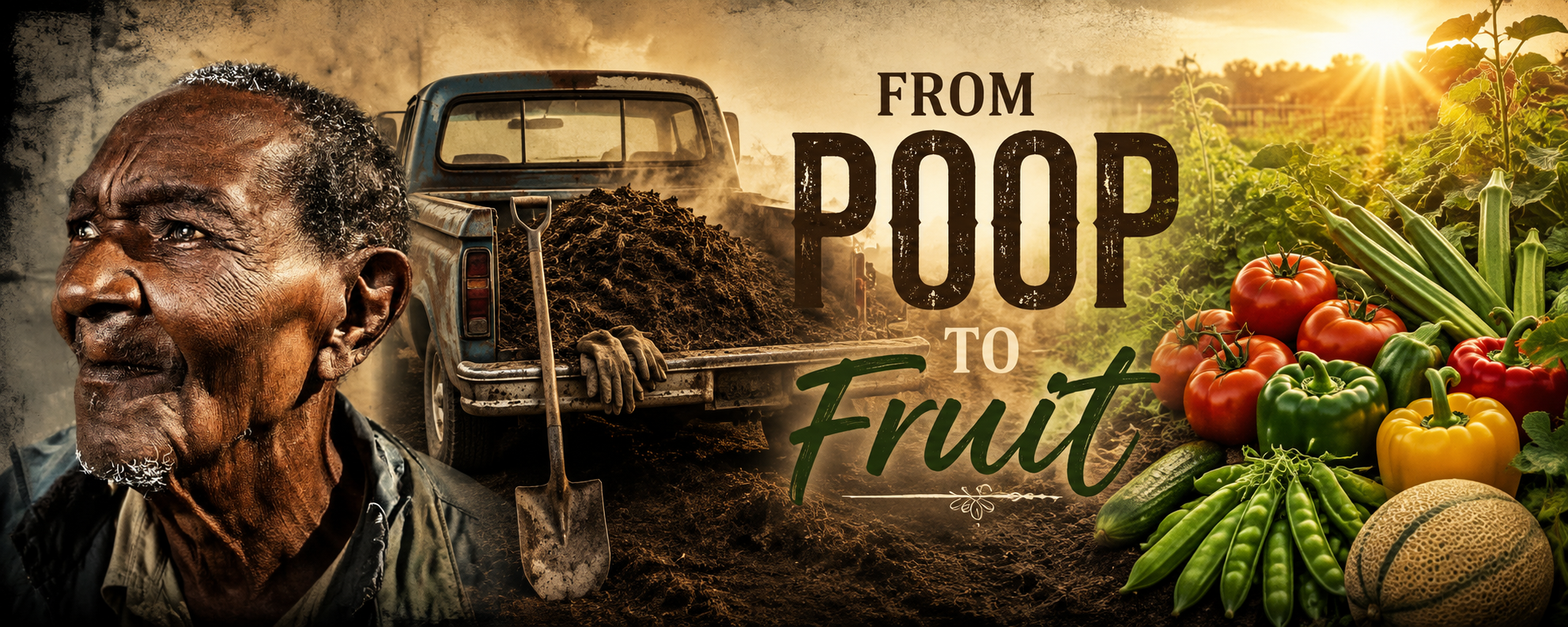

From Poop To Fruit
The Many Lessons From PawPaw’s Garden
by Michael “Madge” Allen
Southwest Louisiana has always been rich with many things. Culture, good people, festivals, good music, decades of tradition, and, amazing food.
The arrival of spring meant many things in my childhood. Watching my favorite Mardi Gras marching bands, Easter suits, the home stretch to summer, and my PawPaw’s garden.
Enter Francis Alex.
Save Also known as Uncle Francis. Also known as Black Sam. He was the man solely responsible for my love of fishing, being a good neighbor, appreciating hard work, keeping your word, practicing generosity, and having good old-fashioned country common sense. He never could understand how buying anything saved you money, no matter how “on sale” it was. His thinking was simple: “If someone else made a thing, then so can I. So why should I pay for it?”
The month of March meant planting season.
Like clockwork, he would pull up to the house in that old pickup truck right in the middle of my Saturday morning cereal-and-cartoon ensemble. I could smell that ripe mixture of fresh manure and whatever else, from inside the house.
The aroma was, tremendous! Yup. Fresh, piping hot, poop.
On one side of my grandparents’ property stood his 3,050-square-foot shotgun-style home, built in 1860.
Three bedrooms, a combined kitchen and eating area, one bathroom, a living room with a funky soul oil lamp and record collection which filled the room with the sounds of The Jackson 5, Boz Scaggs, R.W. Schambach, Earth Wind &-Fire, and, “First Lady of Gospel Music,” Shirley Ceasar.
Just outside the door was the ever-popular gravel driveway. About ten yards to the right is where “old man garden” would reside. The garden backed up against a chicken coop and four cages for his rabbits. This was back when urban homesteading was not a trend. It was just how people lived. I’ll never forget the time I witnessed my grandfather grab a chicken by the neck and—Sorry. Never mind. I need to focus.
The old man garden was about 40 by 30 feet. Enough room for approximately six rows of that smelly funky goodness.
The process was simple.
Grab a shovel, break up the soil, and turn it over in the garden area. Once that step was complete, you grabbed a wheelbarrow, headed to the truck and got TO IT, Captain. Mixing the fertilizer into the soil was a crucial part of the process. It was important to make sure everything was evenly and consistently worked into the ground. Every piece of dirt in that garden was a potential place to root some vegetables.
As we worked, I heard stories from days past. It was also common to hear a few sentences of Creole French followed by laughter from the adults. I dared not ask what was said, lest I get, as they say, “knocked upside the head.” Did I mention the smell was absolutely awful? The evening wrapped with seeding and watering. Man, I looked forward to that part. It meant it was time for my reward: an ice-cold Coca-Cola, and maybe a run to the ice cream spot if time permitted. I spent a large part of my childhood on that property. It was like a second home while my mother worked to pay the bills at my childhood home. It was common for the responsibility of gathering the eggs in the morning and watering the garden in the evening to fall on yours truly. I was also responsible for gathering figs for preserving and pecans for whenever they were needed. Around mid-May or early June, the fruit — better yet, the vegetables — of our labor were ready for full harvesting.
Then came the task of getting a few tomatoes over to Mr. Charley, a few cucumbers over to Mr. Black, and some snap peas over to Mrs. Broussard, who was widowed. But I rarely came back empty-handed. It was like fruit and vegetables were some type of neighborhood currency. We did not grow tangerines, sweet corn, or watermelons, but somehow I managed to return with a few of those. That was the beauty of it. Those neighborhood gardens didn’t just feed us.
Save It connected us.
Although most of my family’s elders from that area have transitioned to their eternal rest, I often reflect on the time I spent in my PawPaw’s garden. Specifically, the fertilizer. That magnificently gross concoction somehow produced some of the ripest fruit and vegetables I have ever seen.
Isn’t life like that, though?
If we really think about it, we can all look back and see how some of the most unpleasant moments of our lives were being used to shape us into who we are today. Not every painful thing is comfortable or convenient. Some things are unfair. Some things are heartbreaking. Some things are embarrassing. Some things are exhausting. Some things simply stink. But if those experiences are processed correctly, they do not have to become bitterness.
They can become what I call, fertilizer.
Every time I encounter someone going through a tough time, especially when there is absolutely nothing I can do to bring immediate comfort, I find myself thinking more and more about that old fertilizer. Because there are times in life when things literally stink. There are seasons that are not pleasant. There are moments we would never choose. There are circumstances that feel heavy, inconvenient, unfair, and messy. But somehow, the nutrients our souls are able to extract from those experiences can create a type of growth, compassion, wisdom, and innovation that may not have existed otherwise. I think about how the unpleasantries of a pandemic fertilized parts of our world in ways many of us never expected. Communication technology was forced to grow quickly. Remote work became normal for millions of people, and for some families, that meant more time at home together, fewer hours lost in traffic, and a new understanding of work-life balance.
Telehealth expanded as doctors, therapists, and patients found new ways to connect without always being in the same room. For many people, care became more accessible, especially when leaving home was difficult or impossible. Online education was also stretched and reshaped. It was not perfect, and it was not easy for everyone, but it forced schools, teachers, parents, and students to learn new ways of communicating, teaching, and adapting. None of us would have chosen the pain, fear, loss, or disruption of that season. But even in the middle of something that difficult, certain forms of growth began to take root.
Perhaps, the pandemic was, fertilizer!
I think about how being under-resourced can fertilize resourcefulness. When you do not have every tool, you learn how to make the tool you do have work harder. You learn how to stretch, improvise, fix, borrow, build, and figure things out. I think about how grief can fertilize compassion. The person who has walked through loss often becomes the person who knows how to sit quietly with someone else’s pain without rushing them, correcting them, or trying to explain everything away. And I think about how rejection can fertilize identity. Being overlooked can force a person to discover who they are when no one is clapping. It can teach them to build from conviction instead of applause.
That’s the lesson I learned from PawPaw’s garden.
The manure did not look like blessing. It did not smell like blessing. It did not feel like blessing when I was shoveling it from the back of that truck into my PawPaw’s garden. But buried in that unpleasant mixture were nutrients the soil needed. And maybe that is what life keeps trying to teach me. Some of the things I wanted to avoid were the very things God used to deepen my roots. Some of the things that embarrassed me became the things that gave me compassion. Some of the things that hurt me became the things that helped me recognize pain in other people. Some of the things that felt like lack became the things that taught me how to create. Some of the things that smelled like failure became the things God used to grow fruit. That is not always easy to see in the moment. When you are standing in the middle of the mess, holding the shovel, smelling what you wish you could escape, it rarely feels like anything useful is happening. It just feels unpleasant. It feels unfair. It feels beneath you. It feels like something you would rather not have to touch. But gardens do not grow from untouched soil. Something has to be broken up. Something has to be turned over. Something has to be mixed in. Something has to be watered. And then, after time has done what only time can do, fruit begins to show up in places that once smelled awful. That is the part I keep coming back to. The same thing I hated shoveling in March helped feed us in May. The same thing that made me hold my nose eventually filled our table. The same thing I wanted to be done with became part of the harvest. Maybe life works that way more often than we realize. Maybe some of the things we keep trying to forget are the very things God is trying to redeem. Maybe some of the pain we keep calling pointless still has nutrients buried inside of it.
Maybe not everything that stinks is wasted.
Of course, I would never dare belittle or diminish someone’s trauma or pain. That is not my intention here. Some wounds are deep. Some losses are devastating. Some seasons leave marks that do not disappear just because someone found a lesson in them later. So this is not an attempt to call everything good. It is simply an invitation to consider that even the things that were not good may not have to be wasted. My hope is to offer a little perspective for anyone standing in the middle of present challenges. Perhaps some of the very things that feel unpleasant, unfair, heavy, and messy right now are the same things that will one day fertilize future fruit.
So hang in there, friend!
After time, healing, grace, and proper processing have done what only they can do.
Fruit may begin to grow in places you thought would stink forever.
Peace and blessings.
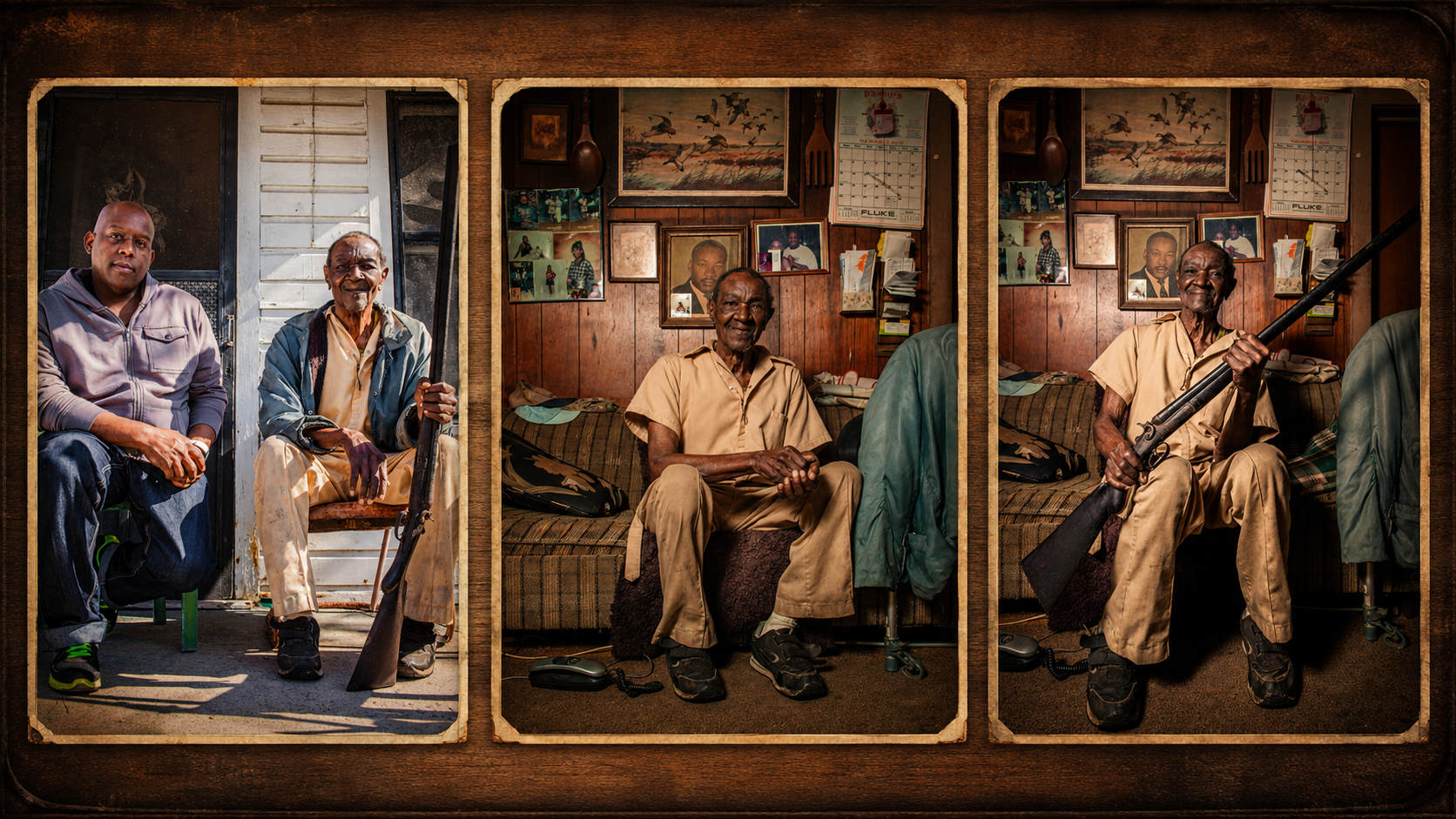
Photo Credit: Eric Brown Photography